Manual · Chapter 6
Audit, CAPA & management review
The recurring duties are where QM systems die in practice. easo guides you through all three — audit programme, corrective actions, management review — and pulls the evidence from your QMS itself.
All screenshots show sample data from Berger Präzisionsteile GmbH — a fictitious company (CNC precision manufacturing, 12 people) used to show every easo feature honestly, open gaps included.
The audit programme: coverage instead of folders
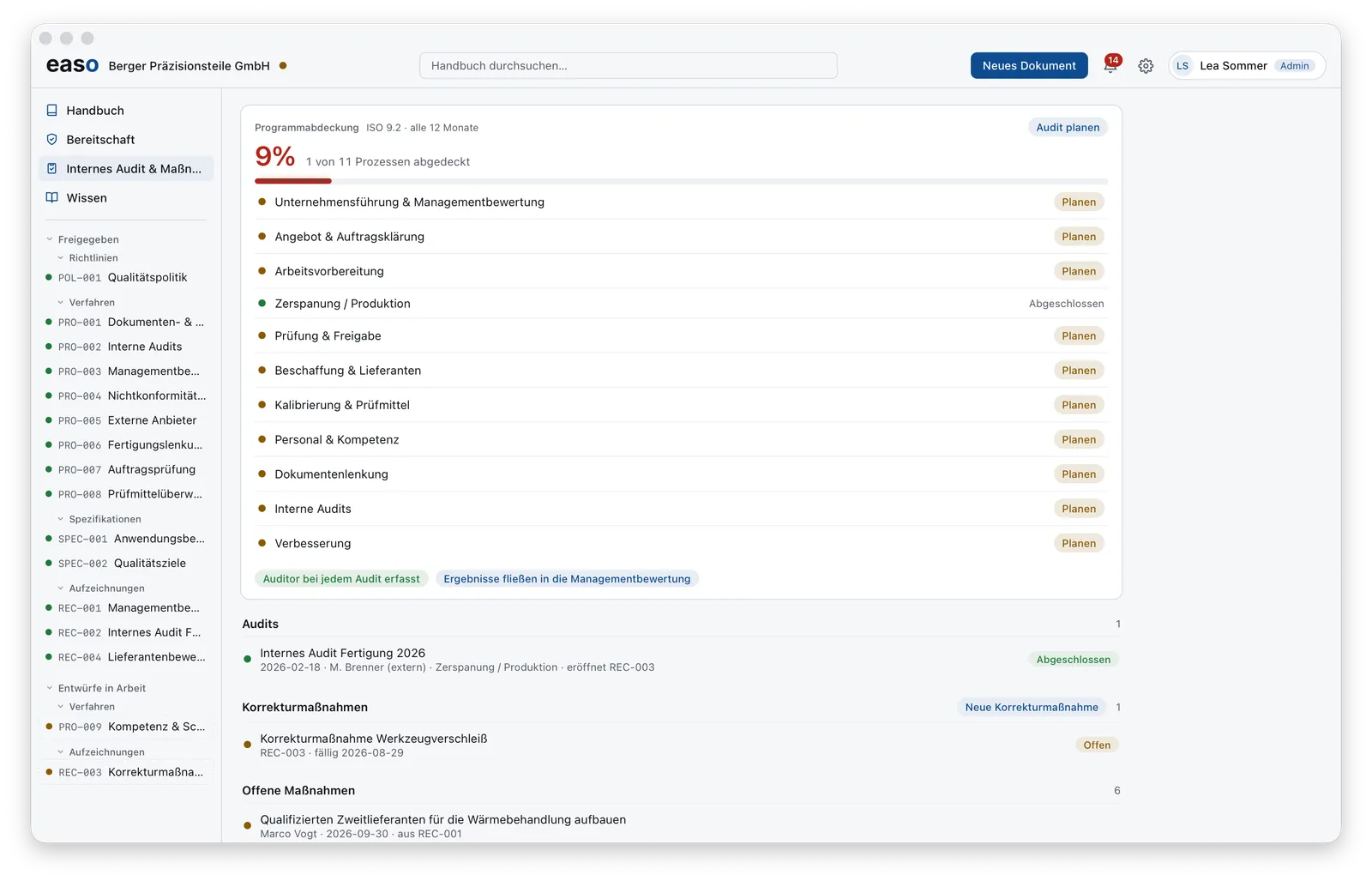
The internal audit programme (ISO 9001, clause 9.2) plans across your process list: every process gets audited within the cycle, and the programme coverage soberly shows how far you've come. At Berger, only machining has been audited so far — 9 %, impossible to miss. That's intentional: the number drives the planning, not a guilty conscience.
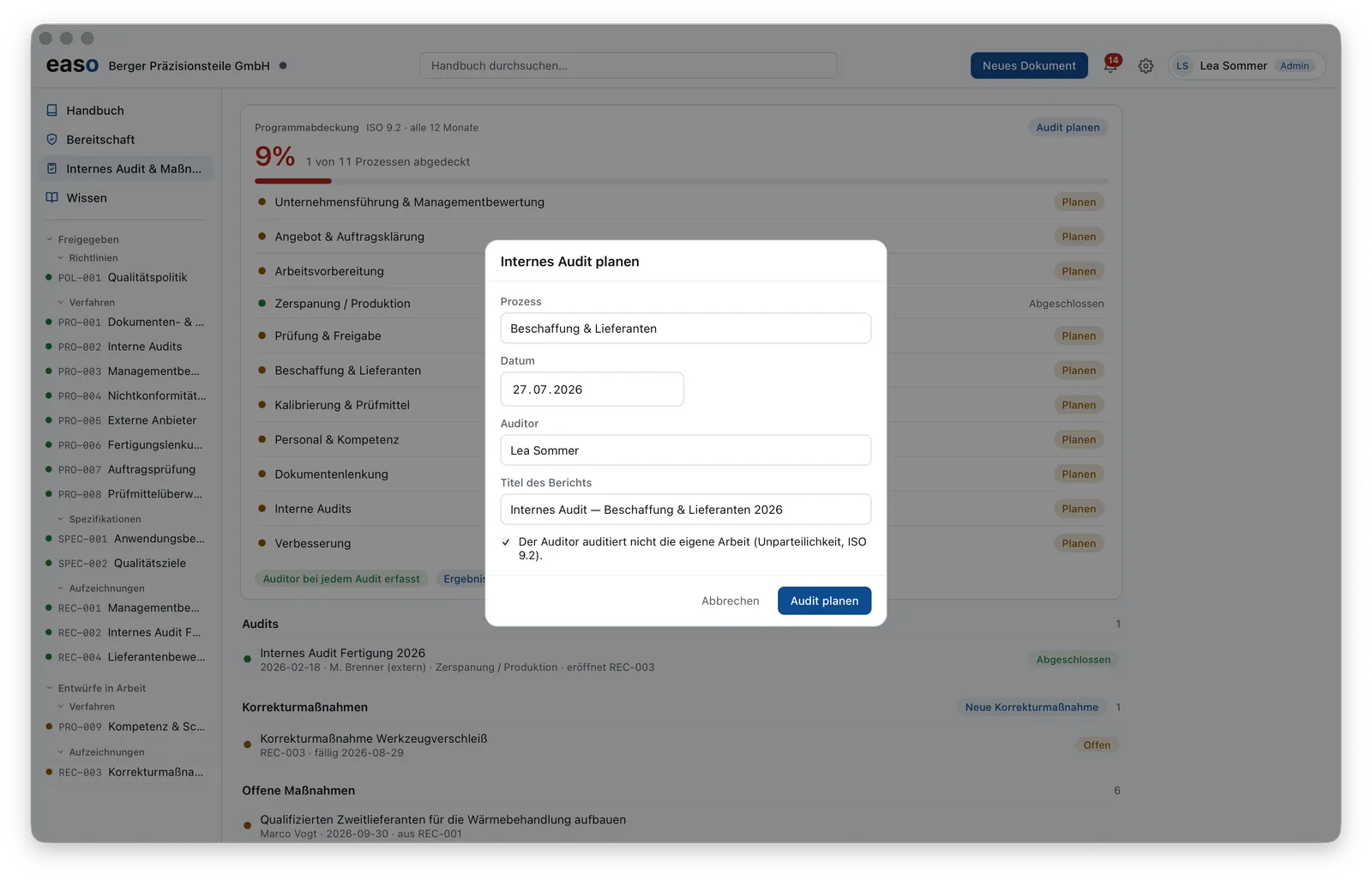
Planning an audit means: process, date, auditor, title — and easo reminds you of impartiality: whoever audits doesn't audit their own work.
Actions: with a person, a date and an origin
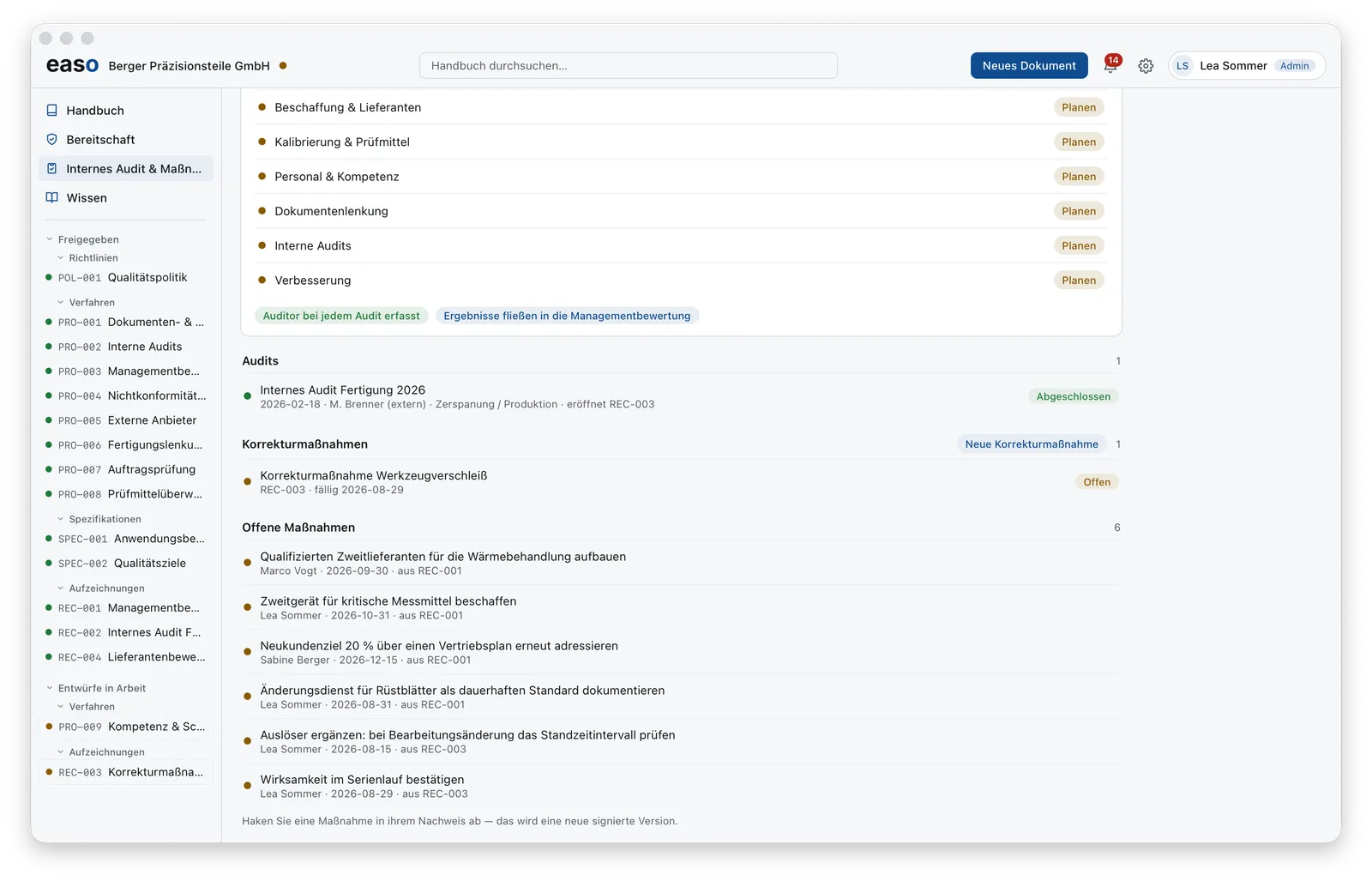
Everything that audits, reviews and corrective actions generate as work collects in one list: each action with an owner, a due date and the record it came from. Ticking off happens in the record itself — creating a new signed version, never a silent edit.
Corrective actions: the guided CAPA case
A corrective action (ISO 9001, clause 10.2) follows the full path in easo: what happened, immediate correction, root-cause analysis, actions with deadlines — and finally the effectiveness check with a criterion and a due date. At Berger, the “tool wear” case runs from an audit finding: two actions done, two pending, the effectiveness check waiting for six weeks of series production.
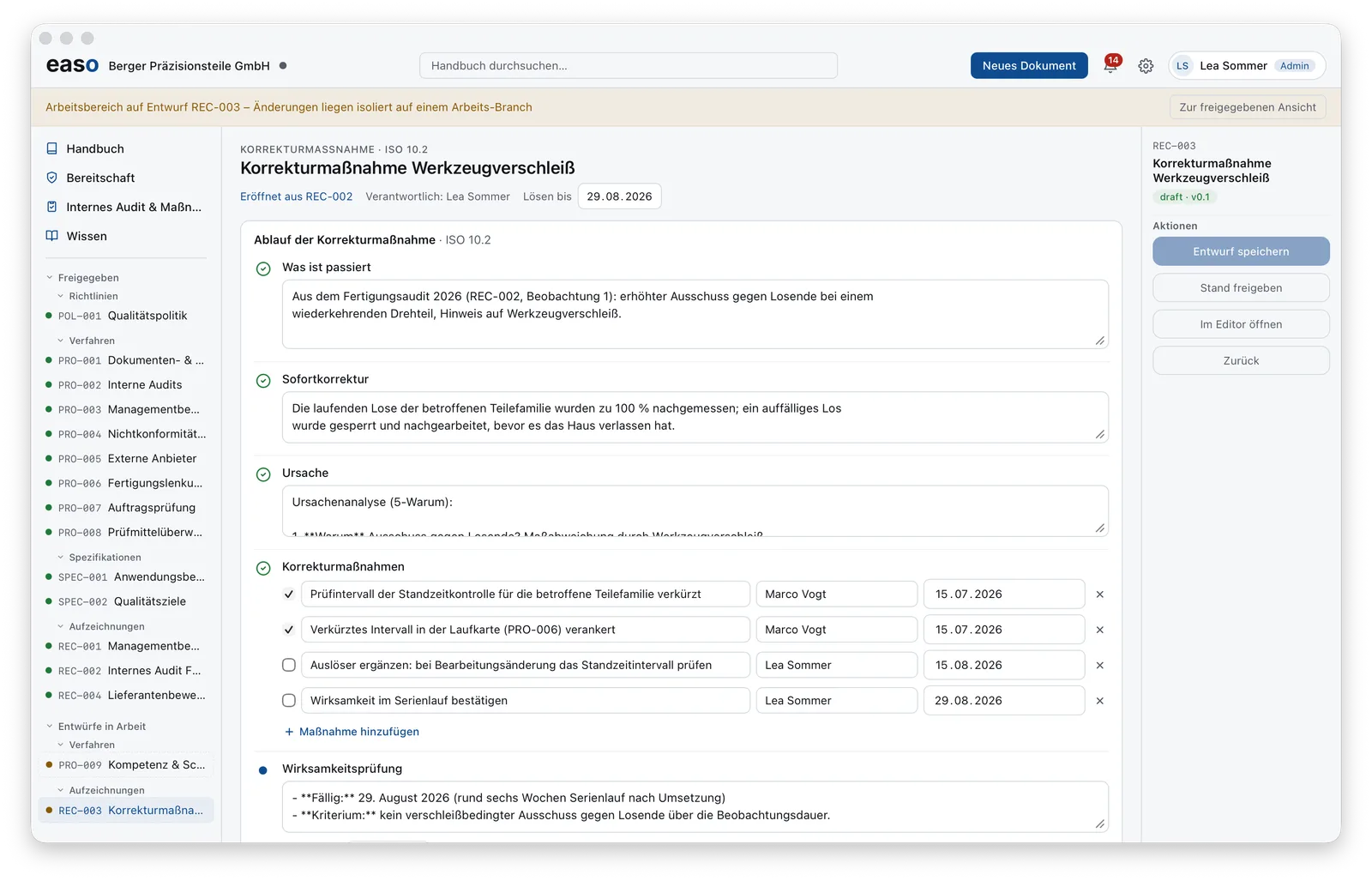
Why corrective actions are the heart of a living QMS is explained in Corrective action (CAPA), explained clearly.
Management review: the evidence comes to you
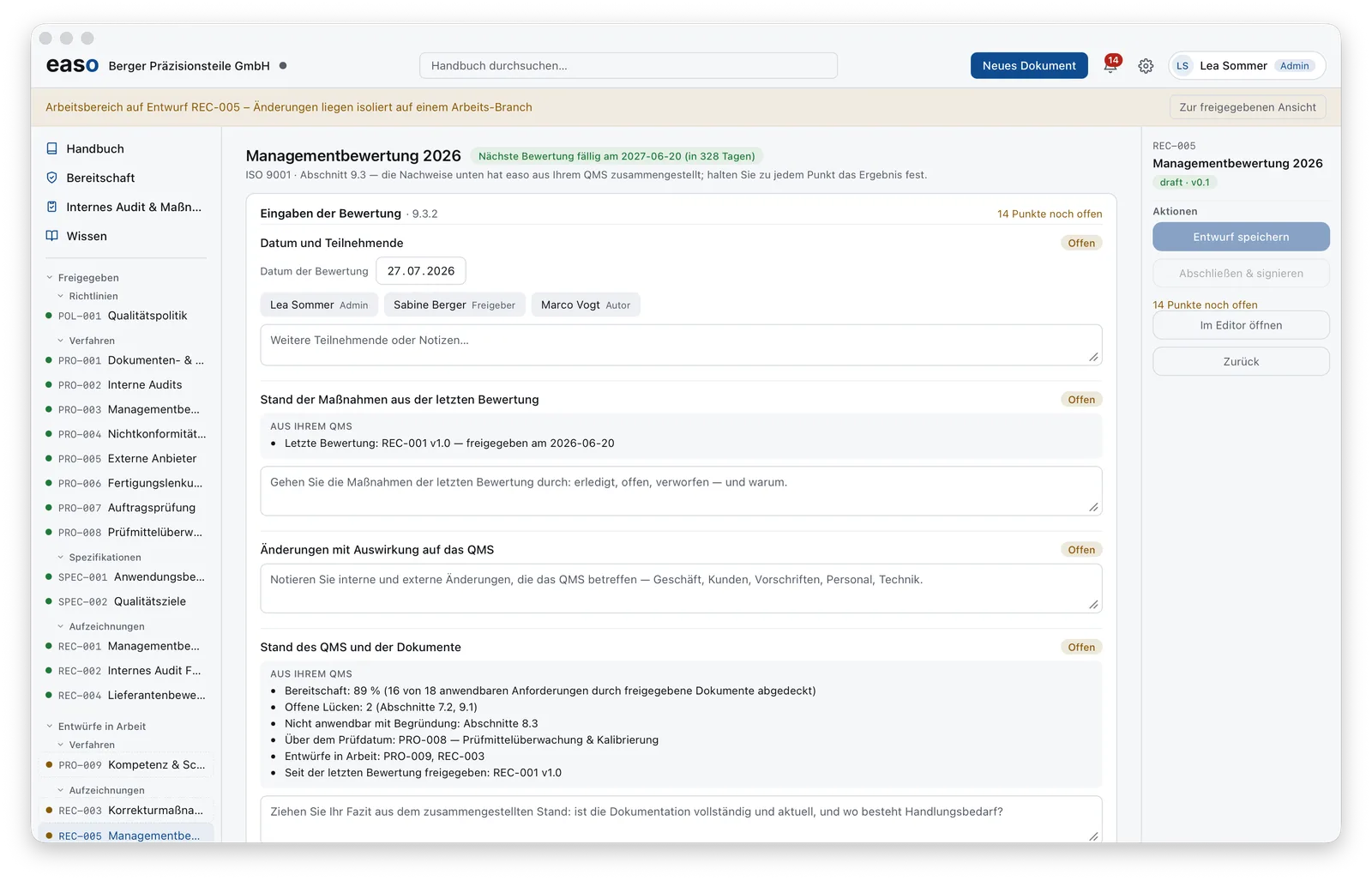
For the management review (ISO 9001, clause 9.3), easo compiles the inputs from your QMS itself: readiness, open gaps, exclusions, overdue reviews, drafts, what was released since the last review. You walk through the items and record your conclusion on each — instead of hunting numbers for days. Completed and signed, the review becomes a controlled record like any other.